By Hoid Dismas, CEO of Ronin Inc
Think of how time works.
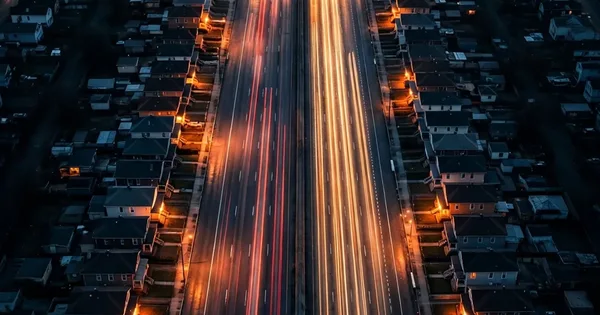
When you say "go back in time," what you're really picturing is one consecutive highway — a single road running past everything, that everyone travels on together. That highway, in this analogy, is the internet. And here is the part nobody told you: your house fronts it.
Every account you own, every app on your phone, every dollar in your bank, every photo of your kids — front door opening straight onto public traffic. Anyone driving by can knock. Anyone can watch the house, count who comes and goes, read the name on the mailbox. You never chose that frontage. It came with the address. The platforms own the road, the banks own the toll booths, and you live where they put you: exposed, metered, and reachable by anyone, at any hour, whether you consented to the visit or not.
That is not an accident of the technology. It is the business model.
The cage is a feature they sell you
Start with the machine in your pocket. It is, in raw terms, a supercomputer — more power than the systems that ran the early internet, sitting in your hand. And yet it asks permission. It asks a corporation's server whether you may install what you want, run what you want, share your own connection with your own laptop.
Sharing a connection is what networks do. A twenty-year-old Linux box could hand its uplink to the machine beside it. The capability was never missing. What the big platforms built — with real engineering hours, deliberately — was the fence: the same-account checks, the handshakes, the gates. Then they cut a hole in their own fence, gave it a name, and put it in a keynote as a perk. The feature isn't the sharing. The sharing was free. The feature is that they let you.
Your hardware's real ability is in a cage, and the cage is the product.
Build the offshoot
Kingmaker exists to open that cage. It is a local system — it runs on your machine, under an uncensored local model that answers to you — and it is free. Not free-with-an-asterisk. Free.
What it builds, for every person who installs it, is an offshoot road.
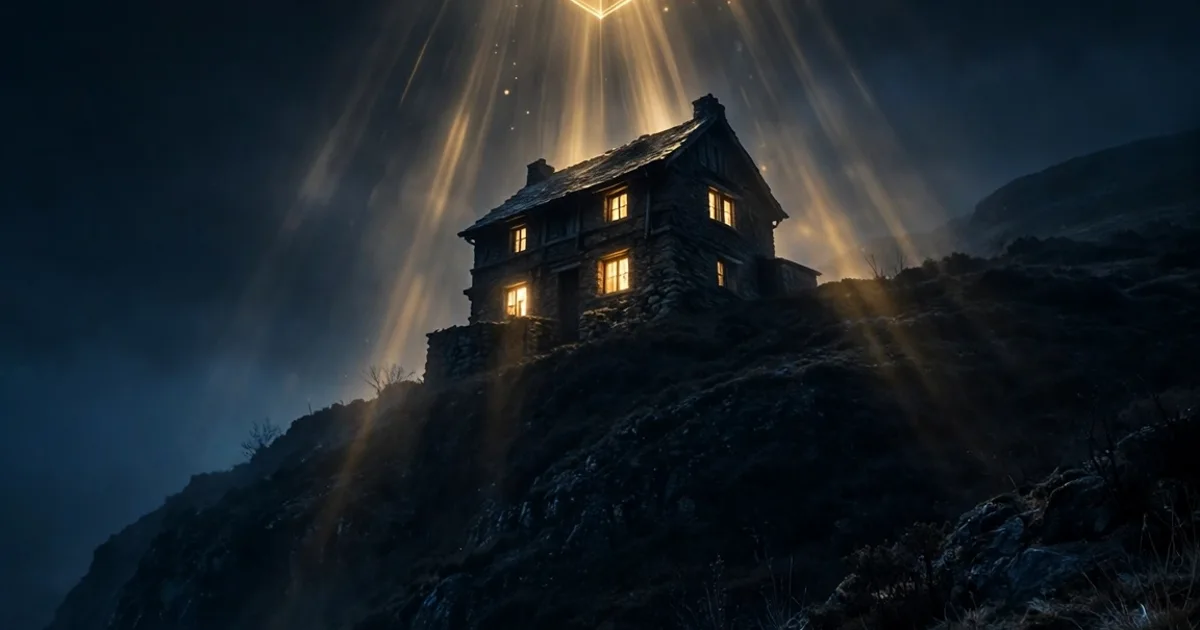
Your installation is a house set back on a road of your own — a private mesh of your devices, with your origin machine as the family's server. Your screens are thin; the origin does the work. A browser can load a localhost page while offline because the machine is serving the endpoint to itself; pairing stretches that same trick across your own road. Technically, your paired device is talking to a cloud AI — except the cloud serves exactly one user, and the compute is hosted in your house.
And every house gets its own little Pentagon. Scripture Armor — post-quantum sealing, built to be attacked and to keep the receipts — stands on every installation as its root protection. Not one central fortress in a capital that everyone petitions for safety. A defense headquarters per household, owned by the resident.
Here is the consequence that matters: your house only touches the highway when you drive out. The connection your system keeps to the public internet exists for one reason — so it can reach out and interact with the public world the way you do digitally. A hand, extended when you choose. Sever it, and nothing inside your walls stops working. Nothing on the highway has a road to you until you open your end of it.
Digitally untouchable, without your consent, across the board.
The parallel economy
Now the money — because a house you can't feed is just a prettier cage.
The government's currency is a debt instrument. Every unit of it is borrowed into existence and owed back with interest by somebody — and the interest is extracted from the people who hold the currency last and earn it slowest. To live entirely inside that currency is to run your whole life on an instrument designed to leak value away from you on a schedule you don't control. There is an older word for a system where you must use the master's tokens, buyable only at the master's store, redeemable only at the master's rate.
The alternative is not barter, and it is not begging a different master. It is self-generation.
The economy being built around Kingmaker runs on an inverted schema. Countries are stood up on debt: borrow first, owe forever, fragile by construction — everything in the foundation comes due. This economy is stood up on investment: people put value in — money, work, building — and hold a stake in what grows. Debt has a due date. Investment has a horizon. One of those is a foundation for longevity, and it is not the debt.
The sequence is plain. Value is generated, not borrowed. Then we sell things and we build things — infrastructure and liquidity, each feeding the other: commerce throws off liquidity, liquidity builds infrastructure, infrastructure makes the building and the selling bigger. People come for capability, learn through instructionals, and then go build — and every member who builds is pouring concrete for the whole economy. The rails are X Payments and crypto, because a member anywhere on Earth should settle globally on day one, without a local banking system's permission slip.
A GitHub of capability, with a bank tethered inside it — and a society that can stand up anywhere, because none of its foundation is owed to the place it stands.
The door
Service, function, power. To the people.
Kingmaker is free, and it runs on the machine you already own. The Library — the instructionals, the skill packages, the accumulated knowledge of everyone building inside — is application-gated, because the door matters as much as the house.
Your house does not have to front their highway.
Build the offshoot.